
At first, it does not feel serious.Reading glasses just do not seem to work quite as well anymore. You secretly increase the font size on your phone, then tell yourself everyone does that now anyway. You start using the flashlight on your phone to read menus or grocery labels once in a while.
Street signs seem harder to catch early enough in unfamiliar places, so you miss a turn and feel more rattled about it than you expect.
Most people explain these moments away. They blame stress, fatigue, getting older, dirty windshields, faded road paint, or the fact that everybody seems determined to print important information in microscopic gray font now. One frustrating moment by itself rarely feels important enough to mean much.
Life keeps moving, so people adjust quietly. They sit a little closer to the television. They hold things farther away, then closer again, trying to find the right distance. They rely more heavily on familiar routines and places. They start noticing that cracks in sidewalks are harder to see than they used to be. Colors become a little less distinct sometimes; blues and purples blur together more easily, or greens and yellows stop looking as different as they once did. Faces become harder to recognize quickly from across a room.
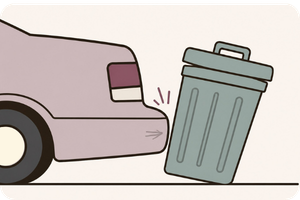
Most of these moments are not dramatic, which is part of what makes them so easy to push aside. A lot of people are not dealing with one giant life-changing moment. Instead, they are dealing with dozens of small frustrating moments that slowly become more common over time. A missed step. A stain on a shirt that somehow went unnoticed until halfway through the day. A small scrape on the car. Finding the trashcan with your bumper.
Sometimes it feels easier to work around these things than to think about them too directly. People adapt, not because they are lazy or ignoring reality, but because human beings tend to approach frightening things carefully, especially when there are still so many unknowns attached to them.
Even small changes can quietly affect confidence. Everyday tasks that used to feel automatic start requiring more concentration.
Familiar places feel easier than unfamiliar ones. Certain situations become mentally exhausting in ways that are difficult to explain to other people.

ften, nobody else notices how much extra effort is happening behind the scenes, which can feel surprisingly lonely, especially when life still looks mostly normal from the outside.
Noticing that some things have become harder does not mean you suddenly need to have everything figured out. It does not mean you need perfect words for it, and it certainly does not mean you have to jump immediately into worst-case scenarios or decisions about the future. Sometimes the first step is much smaller and quieter than that. Sometimes it is simply allowing yourself to notice the pattern instead of treating every moment like a completely separate coincidence.
Honestly, that can take courage too.
Leave a Reply